
NEWS CENTER
In today's rapidly evolving health technology landscape, we are increasingly recognizing that sleep quality is not just about the rest experience—it is a critical indicator of overall health. As the primary interface between the body and the sleep environment, the comfort and support of a mattress directly impact sleep quality. Older generations often say, "Sleeping on a hard bed is good for your back," but this is actually a significant misconception! Given the variations in height, weight, and sleep habits among individuals, a one-size-fits-all hard bed simply won’t suffice. Mattresses need to be "custom-tailored."
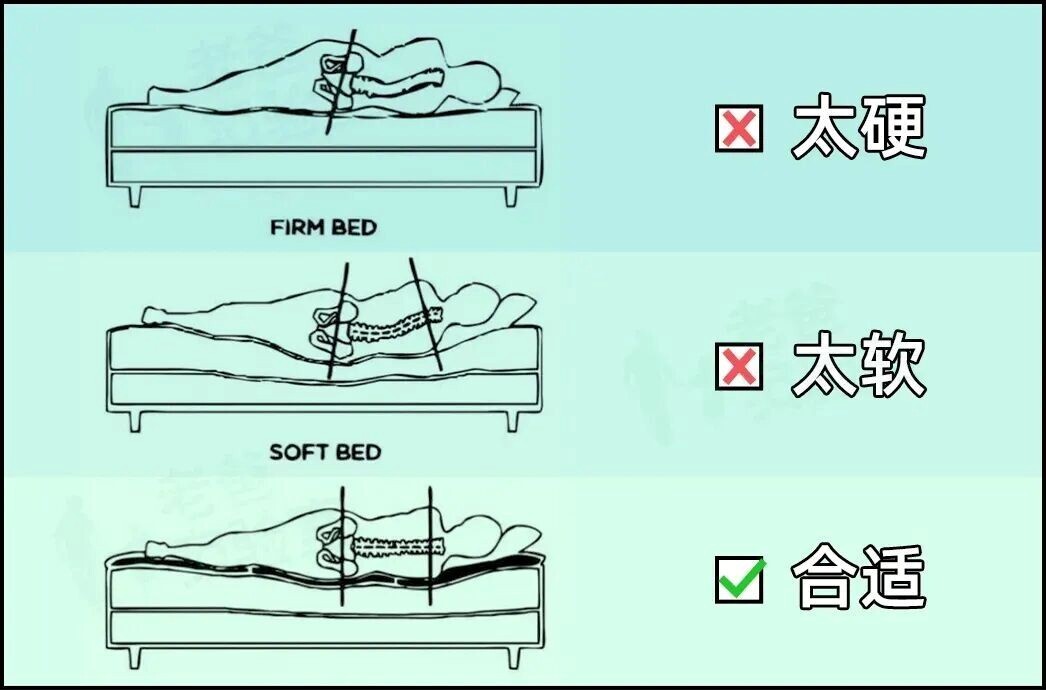
The image is from @Dad's Evaluation.
Underweight individuals: Suitable for medium-soft mattresses, such as memory foam or latex. Mattresses that are too firm can compress joints and impede blood circulation.
Average weight individuals: Opt for medium-firm mattresses, such as those with pocketed coils combined with latex. These provide adequate lumbar support without being overly hard.
Overweight individuals: Require high-density support mattresses, such as those with high-resilience foam or firm pocketed springs, to prevent sagging and protect spinal health.
Children: Growing kids have developing skeletal structures and should use mattresses with good support that are medium-firm to firm.
Adults: Those with spinal issues may opt for relatively firmer mattresses that provide lumbar support. Individuals who prefer a softer feel can choose mattresses made of latex, memory foam latex, or memory foam materials.
Elderly: Older adults with spinal concerns should select mattresses that offer strong support and are on the firmer side.
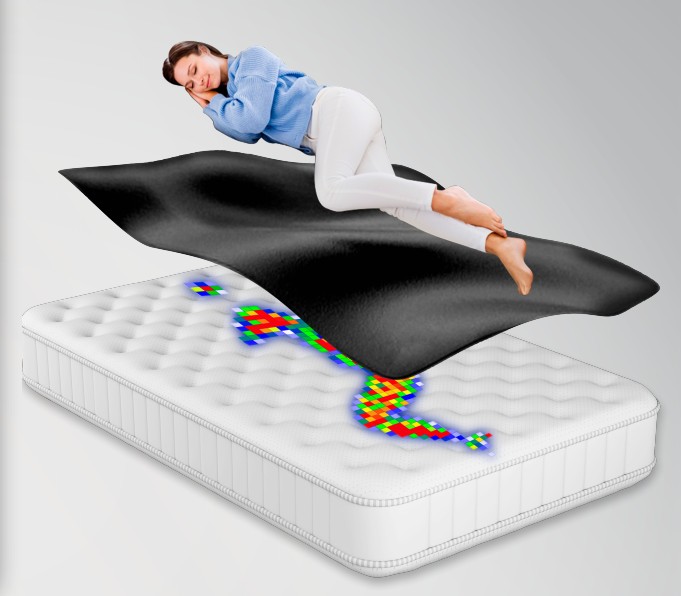
The advent of the PRESSURE FILMS mattress-style pressure distribution sensing system has provided us with an objective and quantifiable evaluation tool. It enables high-precision detection and analysis of body pressure distribution data during sleep, thereby establishing a solid data foundation for optimizing mattress design and scientifically managing sleep health. This innovation is guiding sleep assessment into a new digital era.
Taking baby mattresses as an example, to evaluate the comfort of three different types of baby mattresses, technicians from Shanghai Fengyou Biomechanics Laboratory used the PRESSURE FILMS flexible fabric pressure distribution system to test relevant biomechanical data with a life-sized infant model.
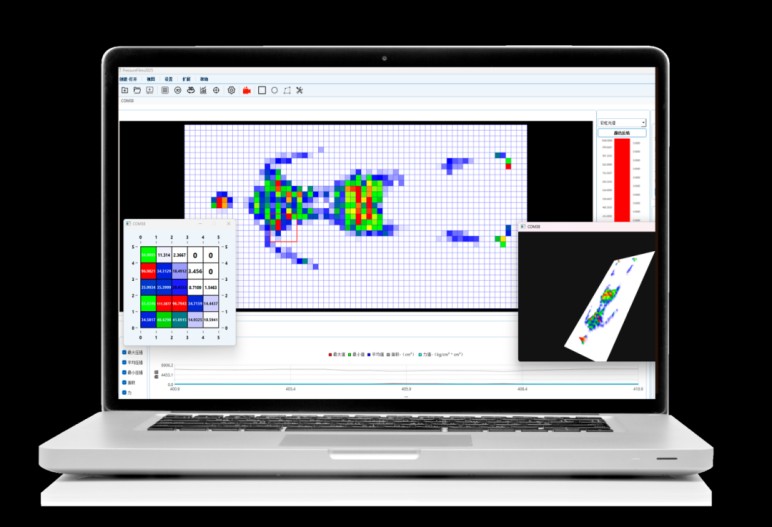
Through the PRESSURE FILMS flexible fabric pressure distribution system, we can observe the pressure distribution of an infant lying on the mattress, clearly identifying the head, torso, and limbs.
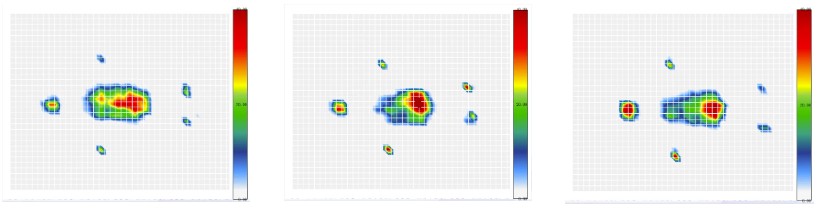
The raw data, when processed with MATLAB, can be used to calculate metrics such as maximum pressure, contact area, average pressure, average pressure gradient, and maximum pressure gradient.
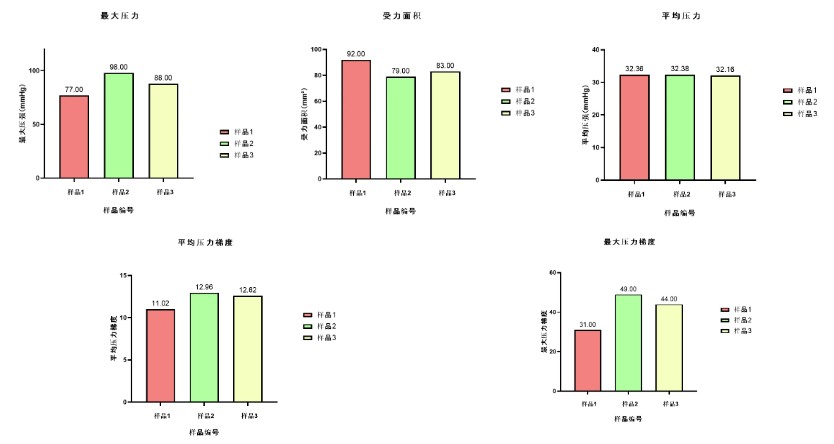
Based on these five metrics, comfort evaluations can be conducted for various products such as mattresses and pillows, helping to test and refine their designs to ensure they conform to body contours, provide effective support, and prevent spinal deformation in infants.
The core of the PRESSURE FILMS system lies in its high-density flexible sensor array, which accurately captures pressure variations caused by body curves with multiple measurement points per square centimeter.
When a person lies down, these sensors act like countless miniature "pressure interpreters," recording the mechanical interaction between the body (such as the shoulders, hips, and waist) and the mattress in real time. This process ensures both measurement accuracy and testing naturalness and comfort.
The professional analysis software of the PRESSURE FILMS mattress-style pressure distribution sensing system transforms raw data into clinically valuable insights. Using advanced algorithms, it not only generates intuitive color pressure distribution maps but also calculates key multidimensional metrics: the overall average pressure reflects the mattress's support efficiency, peak pressure identifies sensitive areas requiring special attention, and the pressure distribution asymmetry coefficient reveals potential risks of spinal imbalance.
In the medical field, for patients who are bedridden long-term, the use of pressure distribution testing systems can monitor pressure changes in areas prone to bedsores, such as the sacrococcygeal region and femoral trochanters. This precision data-based proactive prevention strategy shifts bedsore care from reactive treatment to forward-looking intervention, significantly improving the quality of care.
In the realm of spinal health, rehabilitation physicians can analyze the pressure symmetry between the left and right sides of the body in a lying position, providing objective evidence for the screening and rehabilitation assessment of scoliosis.

Studies have shown a significant correlation between the asymmetry coefficient of pressure distribution and the Cobb angle in the coronal plane of the spine. The non-invasive assessment method offered by the PRESSURE FILMS mattress-style pressure distribution sensing system enables physicians to monitor patients' spinal conditions more frequently and adjust rehabilitation plans in a timely manner.
Additionally, the PRESSURE FILMS mattress-style pressure distribution testing system can accurately evaluate pressure distribution in the abdominal and lumbar regions of pregnant women in different sleeping positions. This helps in designing specialized mattresses that provide adequate support without compressing sensitive areas, and guides the selection of the most suitable pregnancy pillows and mattresses.
The field of bedding research and development is undergoing a digital transformation. Manufacturers can use the PRESSURE FILMS mattress-style pressure distribution testing system to build extensive ergonomic databases, capturing pressure distribution characteristics of individuals with different body types, ages, and health conditions.
Leveraging this data, designers can predict the impact of new materials and structures on pressure distribution, significantly shortening product development cycles. The PRESSURE FILMS mattress-style pressure distribution testing system is increasingly integrating with technologies such as the Internet of Things and artificial intelligence to build a smart health ecosystem.
From laboratory research to clinical applications, from home use to medical settings, PRESSURE FILMS is redefining our relationship with supportive surfaces, enabling everyone to enjoy truly personalized health support.
Recent Post
 03/04/2026The Cross-Domain Application Landscape of PRESSUREFILMS Waterproof Pressure Distribution Equipmen
 19/03/2026Are dog shoes comfortable? Stop guessing and let two "black technologies" give you the answer.
 12/03/2026Technical Advantages and Application Practices of PRESSURE FILMS 3D Force Plates in Sports Biomechanics
 06/03/2026Pressure-Sensitive Paper: Research on Multi-Domain Applications of Engineering Pressure Visualization


Contact Us
Derect Contact with us